Books

Below is a list of books that have travelled en route with me over the last three years, and the list keeps growing.

Sharing the quote from a random magazine I spotted in a little bookshop in Hong Kong but stays with me firmly:

"The trouble with ebooks is that no one else can see what you're reading. Like it or not, books are an astonishingly efficient accessory."

"To love a book is to be overcome by an innate desire to advertise it, so that others might read it and love it too. When there's a book we've enjoyed but can't keep, and we leave it on the communal wall, and then we come back later and it's gone, it's fulfilling in a shimmeringly complex way. Someone else might be reading it: someone else's mind might be becoming just that little bit more connected to our own."

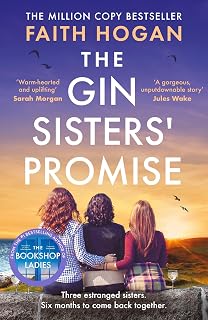
The Gin Sisters' Promise

The Gin Sisters' Promise

Honestly, this isn't the kind of book I would typically pick up in a bookstore. But it carries a deeply special meaning for me. At the end of last month, during my holiday trip in Kotor, Montenegro, the cleaning lady at my Airbnb gifted it to me on the day I checked out. She didn't speak English, but she used Google Translate to tell me she had owned this book for a long time, always waiting for the right person to give it to. Having watched me reading on the terrace every day, she wanted it to give it to me. I was incredibly touched, and I knew I had to read it.

At its core, the book is a very warm-hearted tale centered on the complicated family relationships between three estranged sisters. I won't lie that the plotline is undeniably corny and a bit cheesy at times.

While it might not be a literary masterpiece, it was exactly what I needed. Sometimes, we don't need complex plots or heavy themes; we just need a gentle, uplifting story to light up our hearts. Reading it will always remind me of the quiet warmth and unexpected connections we find while traveling.
Nocturnes

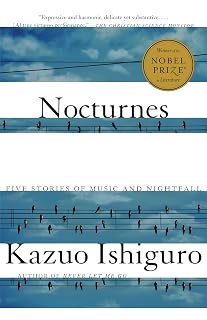
Nocturnes

Wrapped up another one by Kazuo Ishiguro. In this collection, he continues with his usual touch of wit and sadness. These five stories all feature a young musician with great potential, but they are somehow buried in the hustle of life and haven't yet risen to their prime.

These stories made me feel a bit lost sometimes: all of the plots end right after the young musician's interactions with a virtuoso. They just stop there without revealing what happens next to the protagonist, or whether they were truly inspired to live up to their potential. Each short piece could've easily been extended into a complete novel of its own, as there are so many side stories alongside the main plot that could be developed. But maybe that's exactly why he wrote them like this :)

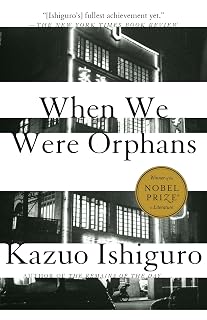
When We Were Orphans

When We Were Orphans

My third Kazuo Ishiguro book, and a fun read with mixed feelings. The story follows Christopher Banks, a reputed English detective navigating the French Concession in Shanghai on the eve of the Second World War, on a mission to find his parents who went missing under causes he believed to be noble, but turned out to be an idealized white lie to protect him all along.

What stayed with me is how interesting it is to view that traumatic history through the lens of an Englishman living in an ivory tower. Even as he wanders through the combat zone completely untouched, he remains profoundly disconnected from reality, witnessing a girl's entire family dying on the floor, yet still trying to convince Chinese victims that his Japanese soldier friend was innocent. It felt as though he never left the well-protected bubble of his International Settlement childhood, unable to truly confront the cruel reality unfolding right in front of him. How, within the same country and even the same city, people can live completely different lives based on their race.

There's something darkly ironic in how Ishiguro uses the detective genre as a vehicle for self-deception as Banks is celebrated as a great detective yet spends the whole novel failing to solve the most personal case of his own life.

I was also surprised to see Kazuo writing about this history in such a critical and subtly sarcastic manner as a Japanese-British author, which makes his perspective even more special. Now onto the next Kazuo Ishiguro book!

Klara and the Sun

Klara and the Sun

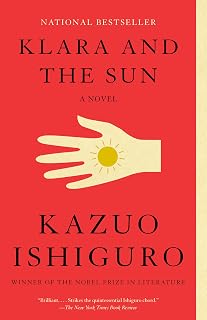
This one left me with a very mixed and unsettled feeling, maybe that's why this review came almost 4 months after I finished it. After reading Never Let Me Go, my expectations for Ishiguro's more recent work were high, but this book just didn't strike me in the same way. Throughout, I found myself caught between appreciating the keenness of observation and the emotional depth that an AI companion could offer, and yet puzzled that a robot of such intelligence could so fundamentally misread how humans actually work. One plot point that puzzled me in particular: Klara going to pray to the Sun for her owner's health, it just felt genuinely bizarre.

I think the premise had so much more potential, especially coming from Ishiguro. But the story struggles to escape the clichés of human-robot intimacy and never quite reaches the depth I was hoping for.

What bothers me most, perhaps, is the overly childlike narrative tone, at times it felt less like literary fiction and more like a book written for children.

Katabasis

Katabasis

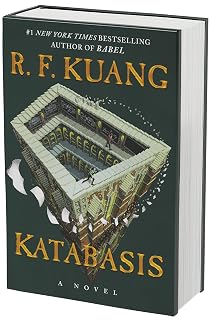
My very last R.F. Kuang book (before she publishes anything new), and this one is even wilder and more far-out than anything else from her exceptional imagination: a magic grad student accidentally (or not so) kills her advisor and descends into hell to bring him back. The entire story surprisingly never felt strange or forced; the way she describes the different houses of hell echoes remarkably with ancient Chinese folklore and mythology, deeply rooted in Chinese philosophy. Whenever I read a Kuang book, I always feel that strong sense of familiarity, even when the story couldn't be more remote from my own reality. Her ability to weave Asian philosophy and ancient Chinese context into what appears on the surface to be a thoroughly Westernized story is endlessly fascinating.

This is also the first of her books to end with a genuinely happy ending, and I read it with a great sense of lightness.

What a fun read!

The Poppy War Trilogy

The Poppy War Trilogy

3 books with 1,800 pages in 3 months... wow….

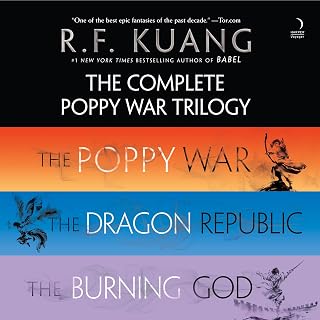
I spent at least 30 mins every night devouring the R.F. Kuang debut trilogy (and never get tired of it!). Every time I picked them up, a pragmatic voice in my head asked, "Why am I reading this?" But I shattered the question immediately because I was having so much fun!

Reading The Poppy War was a disorienting experience for me that a Western reader might not resonate with. Kuang uses names deeply etched into Chinese history and mythology—Su Daji, Jiang Ziya, Nezha. These are national legends from Gods of Honour (with 20+ TV/film adaptations), but she remixes them into a completely new narrative.

I found myself constantly battling my "stereotypical impressions." I know who Su Daji and Nezha are supposed to be. I know the story of "Jinzhou." But in Kuang's world, they have new identities and destinies. It is a weird, fascinating combo: the comfort of familiarity clashing with the shock of a completely new fictional war.

About the ending: If you've read R.F. Kuang, you know she doesn't believe in happy endings. She doesn't try to please the audience at all (but that's why I love her!). The trilogy ends with sacrifice and forces you to confront a heavy question: Can a single hero save a nation? Or does the hero have to burn so the nation can survive?

Verdict: 10/10. ⭐️⭐️⭐️⭐️⭐️ If you haven't read her yet, start with Yellowface, then you will be as obsessed as I am! And I was so happy learning she released a new book last year, so I still have one more massive book from her to devour!

Frankie

Frankie

I've really enjoyed picking up random books from bookstores while I travel. As long as the book is readable, I try to finish it, and most of them have turned out to be better than I expected so far.

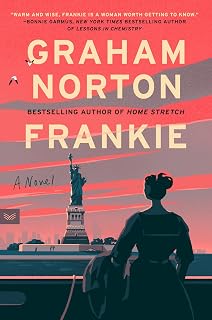
Frankie was one of those happy surprises. It's a historical fiction novel that I read in just six hours, and it introduced me to the Irish writer Graham Norton (who's also a famous TV host but I didn't know that before).

The book is easy to read and quite fun. Even though some of the storylines are a bit predictable, there are still a few unexpected twists. What really amazed me was how well Norton writes about women, their thoughts, feelings, and struggles. He does it with so much care and detail that I actually stopped and thought, how does he understand all this so well as a man?

The story follows Frankie, an Irish girl who loses her parents and ends up married at 18 to a man twice her age. Her life takes many turns: she gets left behind, moves to London, then ends up in New York by accident and stays there for 20 years. She builds a new life, starts a career, falls in love, and then loses that love when fame changes everything. Her husband cheats on her just when they finally "make it," and that part felt especially heartbreaking.

What I loved most is how the story is told from Frankie's point of view as an older woman, talking to her carer. Even though she's been through a lot, she tells her story with humor and kindness. It makes the book feel warm and full of life, even with all the sad parts.

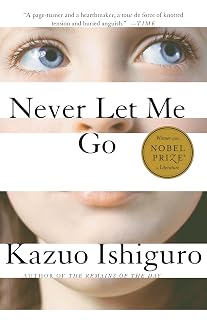
Never Let Me Go

Never Let Me Go

One of the saddest, most helpless and hopeless books I've ever read.

I was drawn in by the quiet, almost gentle narration from the perspective of a cloned girl. At first, I didn't even realize she was cloned, and that's precisely when the heartbreak hit. The moment it clicked, the sadness came flooding in.

We're shown a world where human beings with full emotional capacity are created solely to serve others: to cure "real" humans, the ones deemed more worthy simply because they were born the natural way. Who gave us the right to create life only to take it away for our own survival? To extend our lives with better organs, at the cost of another's existence?

What struck me most is how the society in the novel, much like ours, copes with this horror: by turning a blind eye. By convincing ourselves these beings are somehow less than human, unworthy of decent treatment, education, or even livable conditions. It's chilling how clever and how self-deceiving we can be.

What does it mean to be human? Who gets to decide that? And who gets to determine whose life is more valuable?

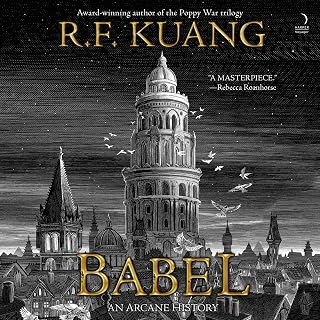
Babel

Babel

After three months and 500+ pages, I closed Babel this morning with the peculiar ache that comes from finishing something that has fundamentally shifted how you see the world. This was the longest fiction I've ever read, and Kuang earned every page.

Kuang poses a devastating question: what if translation was literal magic, and the British Empire weaponized it for colonization? At Oxford's Royal Institute of Translation, students create magic through silver bars by exploiting the untranslatable gaps between languages. The premise sounds fantastical, but the horror feels terrifyingly real when these translators realize they're being used as weapons against their own homelands.

"Translation in its essence, is always an act of betrayal," and Kuang makes this viscerally true.

The second half chronicles the inevitable rebellion. Watching Robin and his cohort discover their complicity in their own people's suffering is brutal. The way Kuang renders the Opium Wars through this fantasy lens made me think of those middle school history textbook photos—Canton residents destroyed by opium—but suddenly they felt immediate and personal rather than distant historical artifacts.

What's brilliant is how Kuang examines the seductive trap of tokenism. These characters exist on what Emma Dabiri calls the "top deck of the slave ship"—granted access to power within a fundamentally broken system. They simultaneously love and hate Oxford, craving belonging while recognizing their exploitation. Do you stay comfortable and avert your eyes, or do you destroy the machine?

The ending, where they choose to destroy both Babel Tower and themselves, reads less like defeat than recognition. Sometimes the only way to stop being complicit is to throw yourself into the gears of the system that shaped you.

This is dark academia with actual teeth—no romanticizing of elite institutions, just the uncomfortable truth about how power uses your identity against you while making you grateful for the privilege.

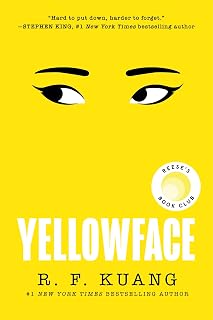
Yellowface

Yellowface

I will stop saying that I only read non-fiction. Yellowface by R.F. Kuang has completely altered my perspective, and I had an absolute blast reading it. I finished it within five hours, and it felt like a blink. Now, I'm ready to be caught up in her magic-realism novel Babel for the next few days.

Described as "a horror story about loneliness in a fiercely competitive industry," Yellowface delves into the controversial discourse of "cultural appropriation." What Kuang does so brilliantly in this book is not directly judging this subject from her perspective. Instead, she unfolds the world of the brutal publishing and the discourses on authenticity through the eyes of June Hayward, who is forever haunted by her act of publishing a deceased Asian writer Athena's book draft and publishing it as her own.

There are some horror elements late in the novel, which really perked me up during the late night, but I wish there could be more (craving for more horror elements!) I really wish the ending could be more elaborative on what the pseudo-memoir of June could be like and how the two contrasting narratives from Candice Lee and June will collide and end.

I'd give Yellowface a 4.5 out of 5 and highly recommend it for a thrilling read!

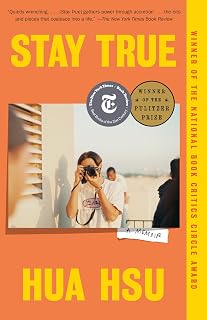
Stay True

Stay True

"Stay True" by Hua Hsu is probably one of the quickest memoirs I've read. Hsu, a Chinese American writer at the NY Times, surprised me. When I first saw the title "Stay True" and learned about the author's background, I assumed it would be another cheesy story of an immigrant child finding their identity. While it does touch on that theme, the book goes much deeper, evoking heartfelt emotions and provoking profound thoughts.

Most of the time, I forgot about Hsu's identity as I delved into his stories from a first-person perspective. He comes across as just an individual fortunate enough to discover his passion, surrounded by great friends, experiencing life's ups and downs, and being a self-proclaimed nerd who enjoys exploring old records while also being open to new genres. He deals with loss, like his friend Ken, and grapples with guilt, immersing himself in memories and eventually finding peace by documenting life's moments. He doesn't strive to assimilate forcefully, viewing assimilation not as a solution but as a challenge in itself.

At times, I found myself wondering which part of US society I would choose to fit into if given the chance to settle. However, I no longer dwell on endless identity struggles. I realize that I'm simply an individual with unique traits, not trying to conform but staying true to what brings me joy and excitement each day.

The immigrant culture portrayed in the book is appealing for its recognition of differences without making them mere novelties. It emphasizes finding or creating similarities based on shared interests, passions, and hopes for the future, rather than clinging to rigid cultural norms. This fluidity is what allows us to live authentically and build our own cultural identities.

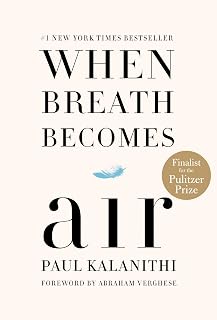
When Breath Becomes Air

When Breath Becomes Air

I am always a fan of non-fiction, especially autobiographies or memoirs, as they allow me to "live" through a real person's life, experiencing their rise and fall, struggles, and everything that makes them who they are today.

However, this book is completely different from all the other memoirs I've read. It is a book about dying, about how one stays alive while feeling the last course of existence.

Staying alive in the face of dying seems to be a lesson that we deliberately ignore in our death-avoidant culture. Dying in one's 30s is unusual, but dying itself is not. Paul Kalanithi narrates his last years of life in such a gasping, yet peaceful way. He faced each stage of his illness with grace and dignity, not with a misguided faith that he would beat cancer, but with authenticity and sincerity to grieve the loss of the future he planned and to forge a new one.

"The physician's duty is not to stave off death or return patients to their old lives, but to take into our arms a patient and family whose lives have disintegrated and work until they can stand back up and face, and make sense of, their own existence." Paul practices this duty by narrating his life, re-examining his life to reflect on what he truly wants to do that is worth the last days of his life.

The epilogue written by his wife Lucy strikes my heart the most. She digests the striking contradiction of their newborn baby and dying husband at the same time. She struggles, fears, and finally accepts and braves the death of her love. She continues to feel such love and gratitude alongside the terrible sorrow the same way after Paul is gone. It feels very desperate and heartbroken when I read the epilogue, but it is also a beautiful narrative to read as you see them form a deeper connection and deeper meaning of each other's lives.

"What happened to Paul was tragic, but he was not a tragedy."

Note: this book is my travel buddy: bought in a bookstore in London, read it on the flight from London to Shanghai, and from Shanghai to New York, and finally finishes it on the train to D.C. Who would've thought I could start my weekend trip with such a sorrow 🙁